



Categories
- Case Study (12)
- Industrial Building (4)
- ESG (26)
- Fit-Out (3)
- News (57)
- Interior Architecture (11)
- Architecture (22)
- Office (46)
- Studio Alliance (24)
- History (2)
- Design (20)
- Technology (13)
- Artificial Intelligence (AI) (4)
Radical changes are taking place in the business world after the pandemic. Employees now come to the office not only to ‘sit at a desk’, but also to produce together, socialise and get inspired. This transformation necessitates rethinking office designs. Gensler's 2025 Global Work Survey offers important clues about how the new generation offices should be.
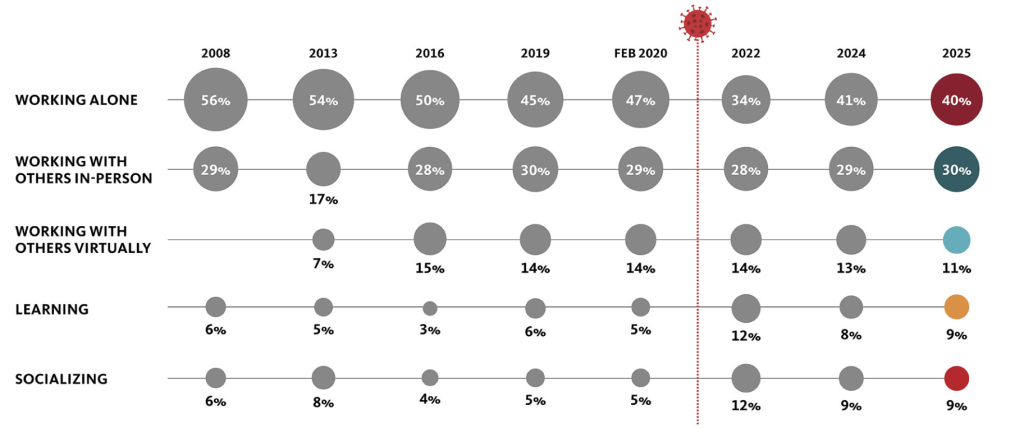
Providing spaces that support focus and collaboration is the most fundamental task of offices. According to Gensler, employees most often complain about the lack of quiet spaces suitable for individual work. Noise level control, natural light and ergonomic adjustments significantly increase productivity.
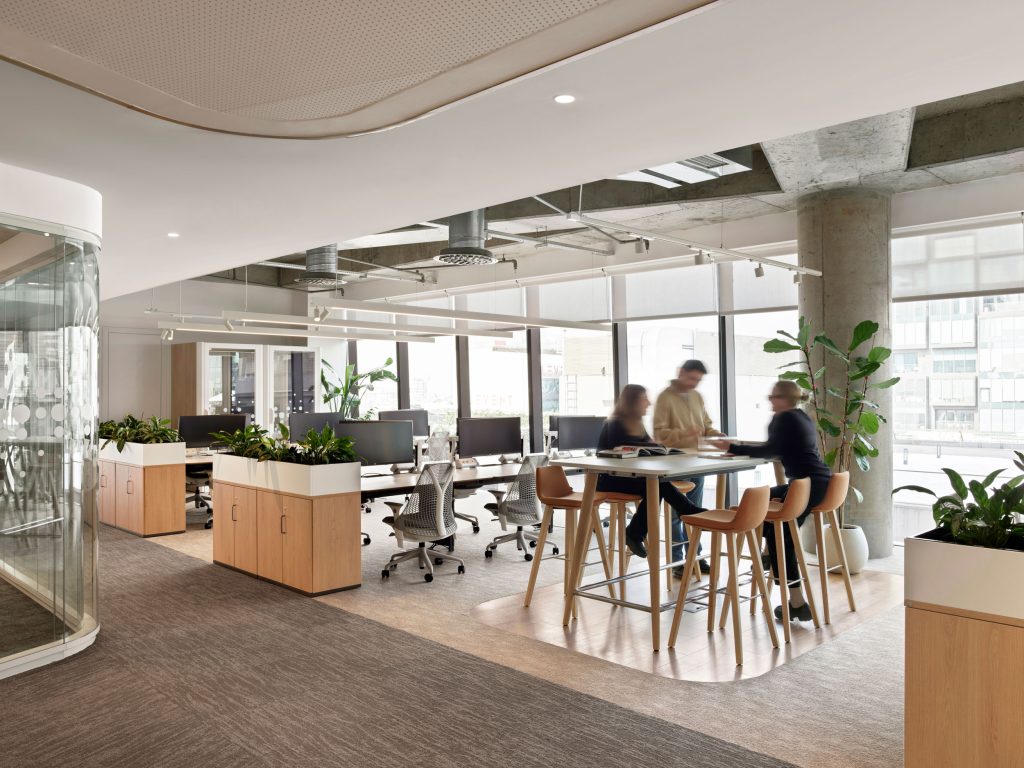
Employees now want to choose the space according to their needs: a focal area for individual work, a small lounge for a quick meeting, an open seating area for a creative exchange of ideas. This approach is known as ‘purposeful abundance’.
Offices are no longer just a ‘workplace’, but also an experience space. Natural textures, art objects, indoor plants and social spaces directly affect employee satisfaction. According to Gensler, such spaces increase employee engagement and creativity threefold.
The most powerful reason to come to the office is teamwork. Physical contact is especially important for creative work, fast decision-making processes and tasks that require co-operation. For this reason, flexible meeting areas and co-working corners should definitely be included in office planning.
It is now easy to measure how spaces are actually utilised and make continuous improvements accordingly. Sensor technologies and reservation systems help to analyse which parts of the office are being used and how effectively.
In 2025, successful companies will be characterised by offices that are not only flexible, but also people-oriented and strategically designed. Gensler's research shows that offices are still important - but now they need to be designed differently.
🔗Source: Gensler, Why Now Is the Time for a Workplace Reset


