Categories
- Case Study (12)
- Industrial Building (4)
- ESG (26)
- Fit-Out (3)
- News (60)
- Interior Architecture (11)
- Architecture (22)
- Office (46)
- Studio Alliance (26)
- History (3)
- Design (20)
- Technology (13)
- Artificial Intelligence (AI) (5)
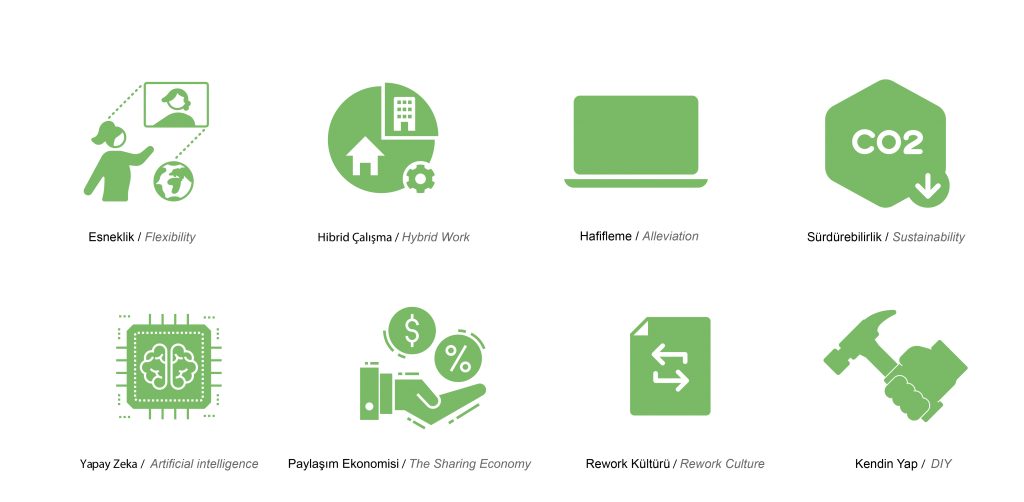
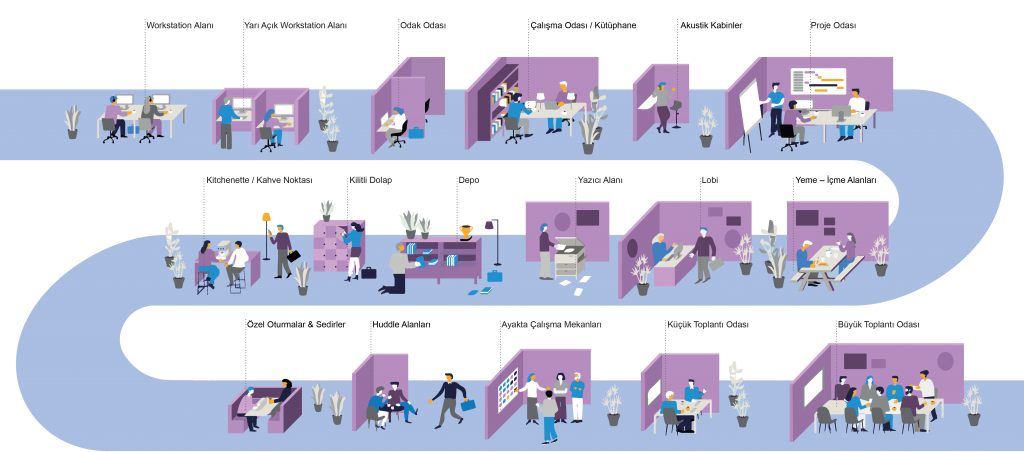
Recognizes that office activities require different arrangements throughout the day and gives employees the freedom to choose when, where and how they work. Expresses the philosophy of creating a flexible environment for employees in office spaces. Offers employees a variety of office arrangements for various tasks and activities throughout the working day.
You can find our blog post on employee preferences here.
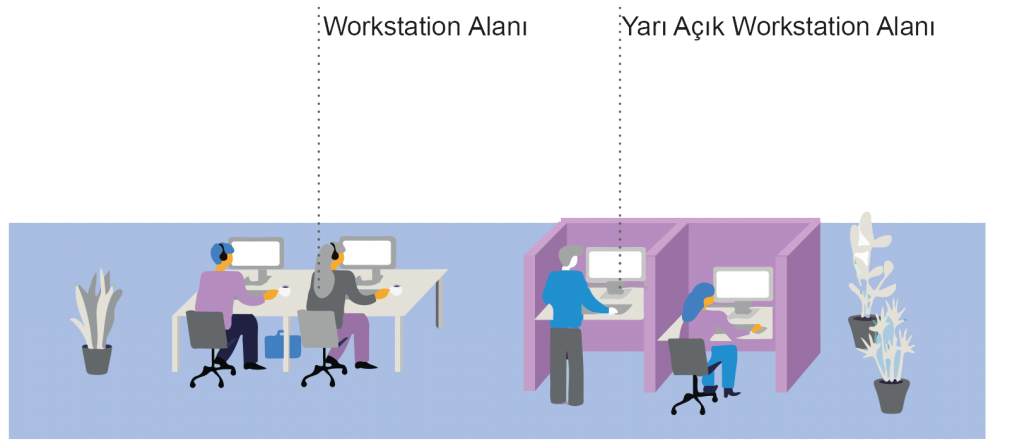
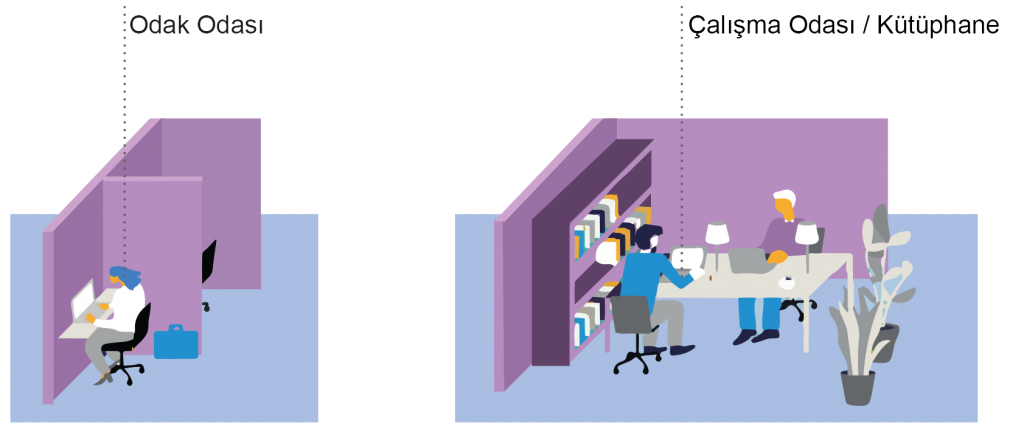
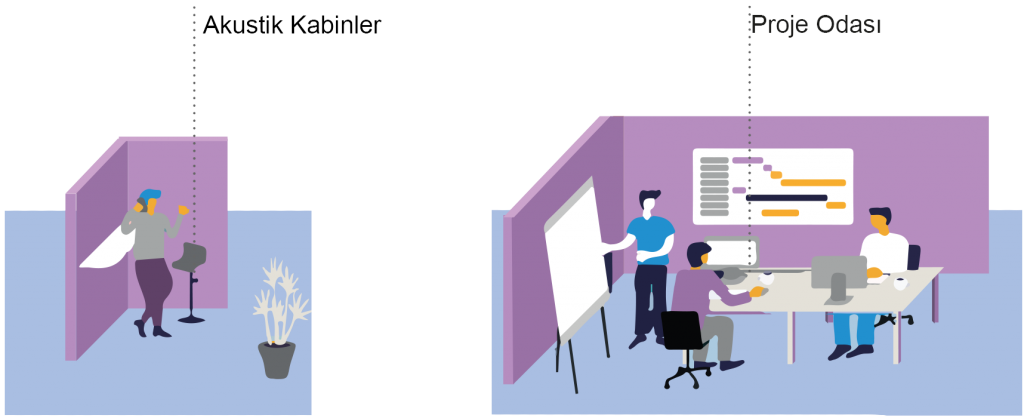
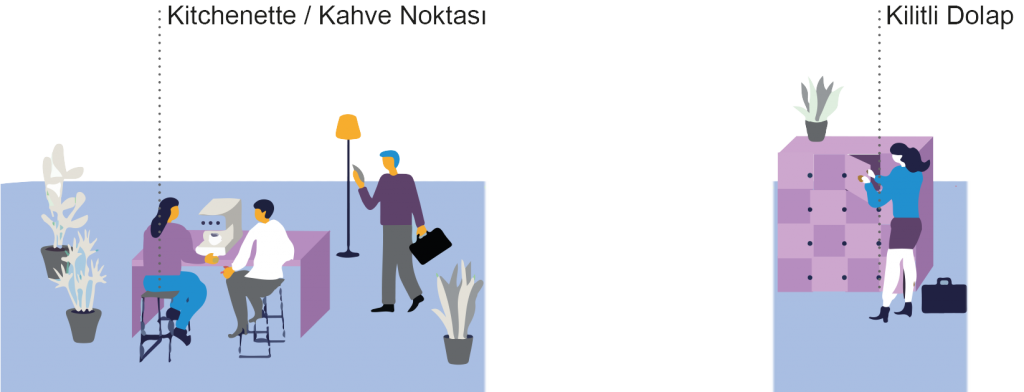
Workspaces should offer different types of spaces/rooms for the above activities and meet the different needs of working modes.
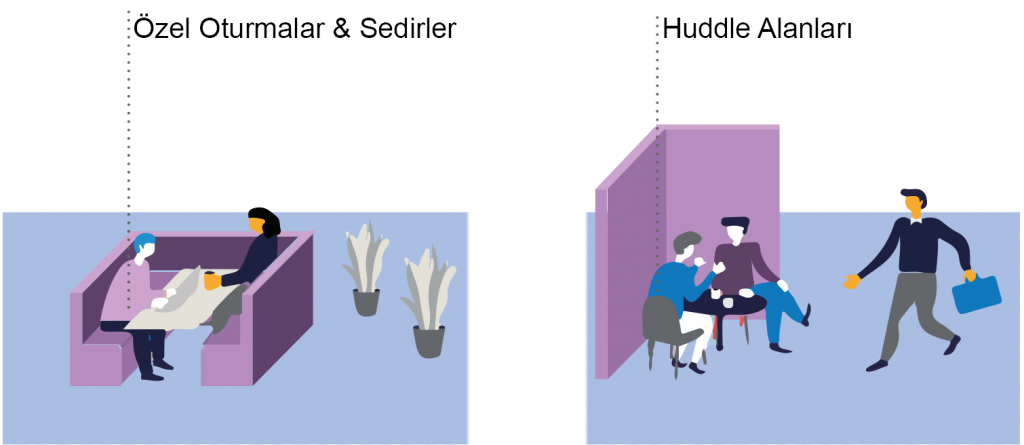
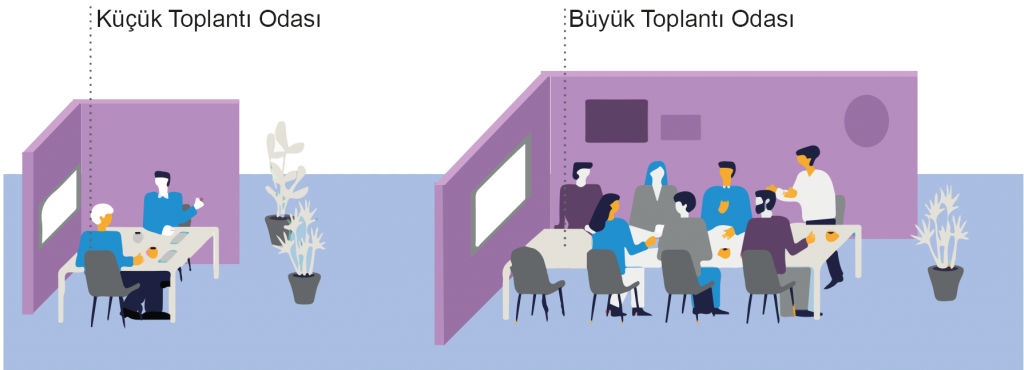
Focus: Unassigned semi-private rooms used for intensive work, quiet spaces and one-to-one discussions. Located in easily accessible places for use. Distractions are minimized.
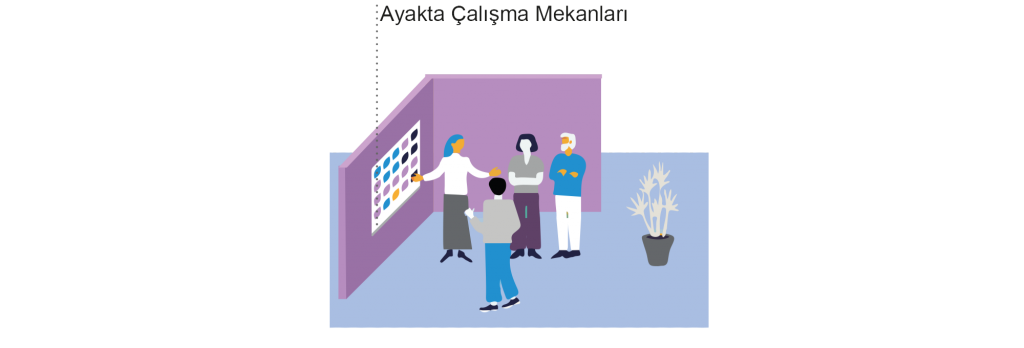
Collaborate: Formal and informal meeting spaces for knowledge sharing, discussion, relaxation and co-creation, face-to-face or virtually.
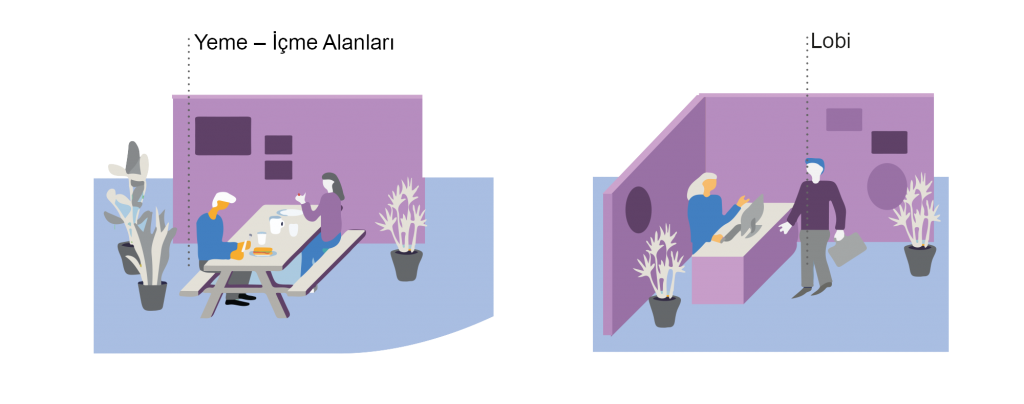
Socialize: A mode for employees to interact informally with each other and build social bonds. Places such as coffee corners, social areas and break rooms.
Learn: Education is a flexible space for concept development, problem solving, discovery, teaching, integrating and applying knowledge.
 The Impact of Design / Workplace 2018: A question of Balance / Gensler