


Categories
- Case Study (12)
- Industrial Building (5)
- ESG (27)
- Fit-Out (3)
- News (60)
- Interior Architecture (11)
- Architecture (24)
- Office (48)
- Studio Alliance (27)
- History (3)
- Design (22)
- Technology (13)
- Artificial Intelligence (AI) (5)
The most expensive element of a project is not always the cost of materials. Sometimes, a delayed decision, an unexpected issue discovered on site, or a breakdown in communication between the design and construction teams can disrupt the entire project programme.This is where the Design & Build approach comes into play. Rather than treating design and construction as two separate stages, it brings them together as one integrated process focused on the same goal. So, what exactly does this integrated approach bring to your project?
In traditional project delivery, the construction team often becomes involved only after the design has been completed. However, not every decision made on a drawing can always be implemented exactly as intended on site.With the Design & Build model, practical construction expertise is introduced while the design is still being developed.
When a detail is being designed, the conversation goes beyond simply asking, “How will it look?” Questions such as:
are considered at the same time.As a result, instead of resolving problems after the design has been completed, the project gains the advantage of identifying and managing potential risks before they become issues on site.
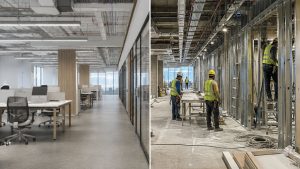
To avoid hearing the phrase, “If only we had spotted this earlier…” on site, early coordination between architectural, mechanical, electrical and construction teams is essential.This collaboration allows technical clashes, challenging details and potential procurement bottlenecks to be identified and resolved at an early stage. Rather than repeatedly revising plans throughout the project, the team can move forward with greater control from the outset.We also explore why early planning is so important in our Industrial Building Design Guide: Project Management from A to Z article.
Accelerating a project does not mean rushing the work on site. The real opportunity to save time comes from making the right decisions before construction begins.With the Design & Build approach, design, cost planning, procurement and construction planning progress simultaneously. This means long-lead items can be identified in advance, while the construction sequence can be developed alongside the design to minimise programme delays.This level of planning provides particular reassurance for projects with fixed relocation, handover or opening dates.
Discovering that a project is over budget once the design has been completed can lead to last-minute compromises that negatively affect the original concept.In the Design & Build model, cost analysis is not an unexpected exercise at the end of the design process. Instead, it becomes an integral part of the design parameters from the very beginning.As materials and technical details are selected, their cost implications can be assessed in real time. Where necessary, alternative solutions can be developed while there is still flexibility to make informed decisions.You can also explore the importance of balancing budget and construction decisions in office projects in our 5 Critical Office Renovation Mistakes and Solutions for 2026 article.
Complex communication chains moving from designer to consultant and consultant to contractor can easily result in lost time and information.The Design & Build approach simplifies communication by bringing all key stakeholders together under one integrated structure.Because decision-makers, construction teams and technical specialists work collaboratively, approval processes become faster, responsibilities are clearer, and the project can be managed with greater overall visibility.
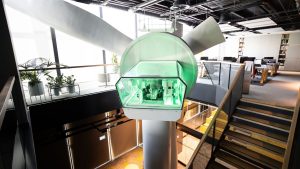
A successful project is not simply about producing impressive renders. It is about ensuring that the vision developed on paper is carried through accurately to the completed space.When design and construction teams work together, even when revisions are required on site, the solution is not simply the easiest option. Instead, the team can identify the most appropriate technical solution while protecting the original design concept.This helps eliminate the disconnect between the design desk and the construction site.
The Design & Build approach is about more than simply having design and construction delivered by the same team. It is about bringing different disciplines together around the same programme, budget and project objectives from beginning to end.The result is fewer surprises, an optimised budget and a stronger design outcome that can be translated more accurately into the finished space.
Ultimately, the goal is not simply to build faster, but to make the right decisions earlier.At Diem, we manage design, engineering and construction processes as an integrated whole, adapting our approach to the specific requirements of projects of different scales. Explore our services and projects to discover more about our Design & Build approach.


