



Categories
- Case Study (12)
- Industrial Building (5)
- ESG (28)
- Fit-Out (3)
- News (61)
- Interior Architecture (11)
- Architecture (24)
- Office (51)
- Studio Alliance (29)
- History (3)
- Design (22)
- Technology (15)
- Artificial Intelligence (AI) (5)
Fit-out projects play a critical role in making an office or commercial space usable and functional. However, poorly planned implementations can lead to rapidly exceeding budgets and extended project durations. When the right strategies are used, it is possible to create efficient and sustainable workspaces while keeping fit-out costs under control. With proper planning and strategic decisions, fit-out costs can be managed effectively.
One of the most common reasons for rising costs in fit-out projects is the lack of sufficiently clear planning at the beginning. A well-planned fit-out process reduces unnecessary revisions, prevents material waste, and ensures more efficient management of the project timeline.
During the planning phase, it is of great importance to clarify basic elements such as space usage scenarios, technical needs, budget limits, and project delivery time. Accurate analyses performed at this stage can prevent cost increases that may arise later in the process.
Comprehensive planning at an early stage can provide savings of 10%–20% in total fit-out costs.
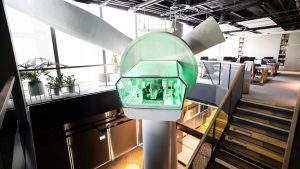
Traditional fixed design solutions can make it difficult for offices to adapt to changing needs over time. This situation may lead to new renovations and additional costs in the future.
Therefore, modular design approaches are increasingly preferred in modern fit-out projects. Modular partition wall systems, portable furniture, and reconfigurable workspaces help the space adapt easily to different needs.
Thanks to this approach, future changes can be carried out at a lower cost, increasing spatial flexibility and making operating expenses more sustainable.
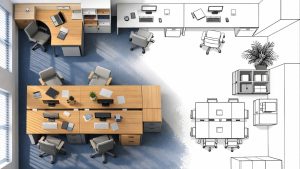
In many office projects, spaces may be planned larger than necessary or used inefficiently. This increases both fit-out costs and operating expenses.
Space optimization is an important strategy that ensures more efficient use of the environment. Solutions such as open office plans, shared workspaces, and multi-purpose meeting rooms contribute to making the working environment more dynamic while reducing the cost per square meter.
A successful fit-out project is not limited to creating an aesthetic space; it also requires establishing a balance between budget, efficiency, and sustainability. Through proper planning, smart material selection, and effective project management, it is possible to create high-performance workspaces at low costs. To capture the perfect harmony between physical comfort and digital tools, you can examine our guide titled How to Establish Digital–Analog Balance in Next-Generation Offices? 7 Office Design Strategies to Increase Individual Focus blog ?
Material selections constitute a significant part of the total budget for fit-out projects and can reach up to 40%–60% of the cost in most projects. However, choosing only low-priced materials does not always provide real savings.
When selecting materials, durability, maintenance requirements, and long-term usage costs should be evaluated together. Long-lasting and low-maintenance materials can provide significant advantages in the long run, even if the initial investment cost is slightly higher.
For example, vinyl floor coverings, modular acoustic panels, or recyclable materials can offer effective solutions for both cost control and sustainability.

Cost control in fit-out projects does not only depend on design decisions. Managing procurement processes correctly also has a direct impact on the budget.
An effective procurement strategy includes working with the right suppliers, procuring materials on time, and carrying out purchasing processes in a planned manner. In addition, a strong project management approach ensures that the work schedule is followed more healthily.
In this way, delay costs can be reduced, coordination between teams is strengthened, and project processes proceed more efficiently.
Energy efficiency is an important factor not only for environmental sustainability but also for operating costs. The right decisions made in fit-out projects can significantly reduce energy consumption in the long term.
LED lighting systems, sensor-controlled lighting, design decisions that increase natural light, and energy-efficient HVAC systems are among the most commonly used solutions in this regard. Such applications can contribute to reducing operating expenses by up to 20% in the long run.
The use of digital tools provides significant advantages in terms of both time and cost in fit-out projects. Especially BIM modeling, digital project management tools, and smart building systems help project processes proceed in a more controlled manner.
Thanks to these technologies, design errors can be detected at an early stage, coordination between teams can be achieved more easily, and delays that may occur during the project process can be reduced. As a result, project delivery times become more predictable.
Başarılı bir fit-out projesi yalnızca estetik bir mekan oluşturmakla sınırlı değildir; aynı zamanda bütçe, verimlilik ve sürdürülebilirlik dengesi kurmayı gerektirir. Doğru planlama, akıllı malzeme seçimi ve etkili proje yönetimi sayesinde düşük maliyetle yüksek performanslı çalışma alanları oluşturmak mümkündür. Fiziksel konfor ile dijital araçların mükemmel uyumunu yakalamak için How to Establish Digital–Analog Balance in Next-Generation Offices? başlıklı rehberimizi inceleyebilirsiniz.
How to Establish Digital–Analog Balance in Next-Generation Offices?
You can also review our fit out services page for professional support.


