


Categories
- Case Study (12)
- Industrial Building (5)
- ESG (28)
- Fit-Out (3)
- News (61)
- Interior Architecture (11)
- Architecture (24)
- Office (51)
- Studio Alliance (28)
- History (3)
- Design (22)
- Technology (15)
- Artificial Intelligence (AI) (5)
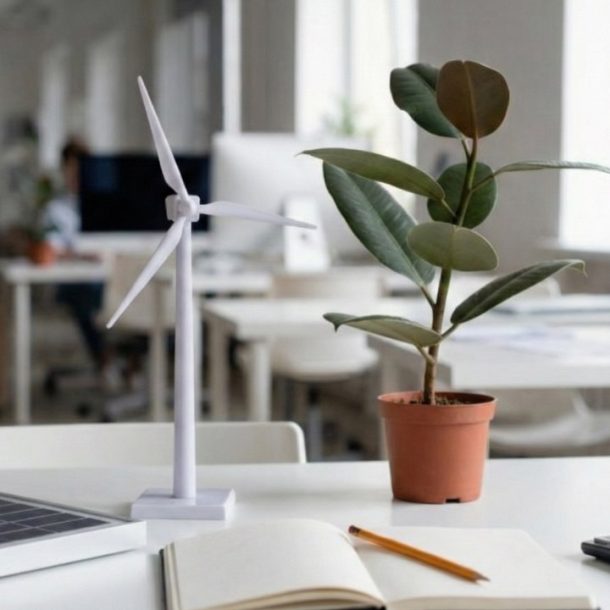
In next-generation offices, digital–analog balance is not merely a matter of technological equipment; it is a spatial strategy that directly affects focus, productivity, and employee experience. Continuous screen use and digital stimuli can lead to distraction and mental fatigue in offices. At this point, analog spaces bring human scale and physical interaction back to the center. So, as we step into 2026, how should this balance be established in office design?
In next-generation offices, digital–analog balance aims to strengthen the relationship between people and physical space while using technology in an invisible, supportive, and controlled way.
Thanks to this balance:
You can explore our previous blog posts to take a look at offices of the near future.

Although fully digital offices may provide speed in the short term, they bring several problems in the long run:
Office trends for 2026 highlight more balanced and human-centered solutions to address these challenges.
Smart systems should not dominate the space. Sensors, automation, and screens should operate in the background.
Screen-free zones are critical for deep thinking and creativity.
You can also explore office designs focused on both collective work and individual concentration..

Meeting rooms should provide equal space for both digital and physical communication.
Wood, stone, and textile surfaces balance digital density.

Digital–analog balance is an important component of ESG strategies.
You can click here to learn more about ESG.
Coffee areas, relaxation corners, and shared kitchens should be free from screens.
In 2026, offices are shaped by:
Digital–analog balance stands at the center of this transformation.
The impact of digital density on employees in next-generation offices is addressed not only as a spatial issue but also as a cognitive one. A study published in Harvard Business Review emphasizes that constant app and screen switching increases employees’ cognitive load and significantly reduces their ability to focus.
Design approaches that push technology into the background and place people at the center form the foundation of the 2026 office mindset. When the right balance is achieved, offices become not just workplaces, but sustainable spaces of experience.
How ready is your office for 2026?
Discover our next-generation office design approach and carry your project into the future.


