



Categories
- Case Study (12)
- Industrial Building (4)
- ESG (26)
- Fit-Out (3)
- News (60)
- Interior Architecture (11)
- Architecture (22)
- Office (46)
- Studio Alliance (26)
- History (3)
- Design (20)
- Technology (13)
- Artificial Intelligence (AI) (5)
Energy Saving Week offers an important reminder to rethink energy consumption not only through individual habits, but also through the way spaces are designed. Energy efficiency is directly related not so much to the devices used, but to spatial configuration, material selection, and the effective use of natural resources. Especially in offices and public spaces, design decisions can significantly reduce energy consumption in the long term. In this article, we examine architectural and interior design strategies that enhance energy efficiency.
A building’s energy performance is largely shaped by decisions made at the project stage. Technological solutions added later can help reduce energy consumption; however, the real impact comes from the fundamental design approach.
A well-oriented building, a thoughtfully planned layout, and conscious material choices reduce heating and cooling needs while ensuring lower energy consumption throughout the building’s life cycle. For this reason, energy efficiency is not a technical detail, but a holistic design issue.
In our approach, sustainability is not limited to system selection; it is addressed as a comprehensive design philosophy that extends to how a space interacts with its users.
Natural light is one of the most powerful and accessible sources of energy savings. When building orientation, façade openings, and interior depth are designed correctly, the need for artificial lighting during the day is significantly reduced.
In open offices, placing work areas close to window façades, planning layouts that carry daylight deep into shared spaces, and the controlled use of glass partitions all support this strategy.
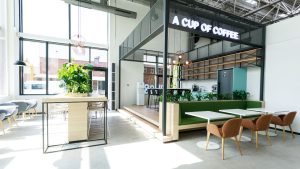
Passive design aims to reduce energy consumption by leveraging the building’s physical properties. Natural ventilation, cross-ventilation, and shading elements for solar control are core components of this approach.
With proper façade design and controlled opening ratios, excessive heat gain in summer and heat loss in winter can be minimized, reducing dependence on mechanical systems.
Lighting design goes beyond fixture selection. Zoning based on usage intensity, motion and daylight sensors, and lighting scenarios designed for different needs directly impact energy efficiency.
With LED technology, combined with appropriate control systems, substantial reductions in lighting-related energy consumption can be achieved.
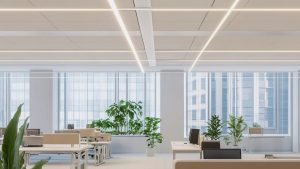
Materials used in the building envelope and interior spaces play a decisive role in energy performance. Materials with strong thermal insulation, high heat storage capacity, and those sourced locally reduce environmental impact while contributing to energy savings.
In addition, durable and long-lasting materials eliminate the need for frequent renovations, thereby reducing indirect energy consumption.
You can also review our previous blog post related to this topic.
Energy efficiency is not only about today, but also about the future. Flexible layouts, spaces that adapt to changing needs, and modular design approaches extend a building’s usable life.
This approach reduces the cycle of demolition and reconstruction, saving both materials and energy. Long-lasting design is one of the most powerful tools of sustainability.
Energy saving is directly linked to user behavior. When spatial design guides users toward the right behaviors, energy efficiency becomes sustainable and long-term.
Spaces where daylight is clearly perceived, natural ventilation is noticeable, and sustainable solutions are visible increase awareness and encourage users to conserve energy.
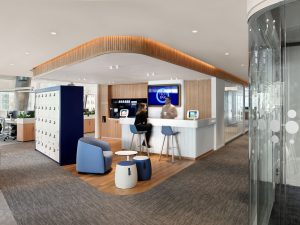
Energy Saving Week is an important opportunity to focus on long-term design approaches rather than temporary measures. For institutions, this week means reassessing environmental responsibilities, making spaces more efficient, and supporting sustainability goals with concrete actions.
Design focused on energy efficiency contributes not only to the environment, but also directly to operating costs and user comfort.
Energy saving becomes permanent not only through technological solutions, but through the right design decisions. We adopt a holistic design approach that addresses energy efficiency from the very beginning of a project. Energy Saving Week serves as an important reminder to transform spaces into a future that consumes less and is used more consciously. Sustainable design makes it possible to consider environmental responsibility together with spatial quality.
Discover Diem’s sustainable and energy-efficient design approach.


