



Categories
- Case Study (12)
- Industrial Building (5)
- ESG (28)
- Fit-Out (3)
- News (61)
- Interior Architecture (11)
- Architecture (24)
- Office (51)
- Studio Alliance (28)
- History (3)
- Design (22)
- Technology (15)
- Artificial Intelligence (AI) (5)
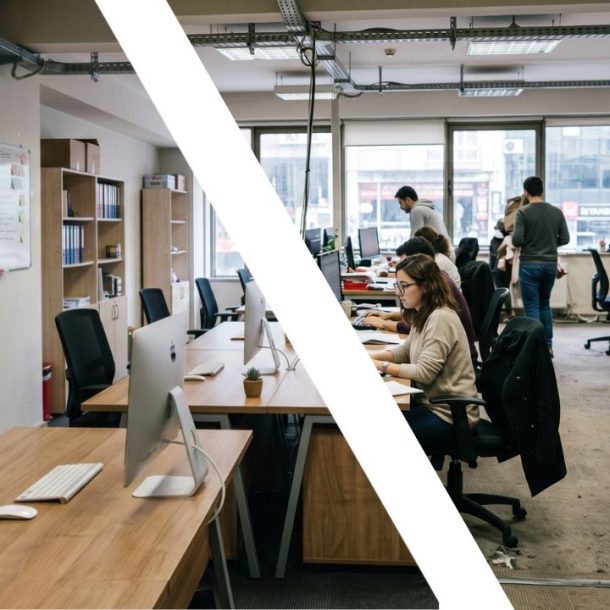
Have you ever wondered if your workspace truly reflects your team's potential and your company culture? To find the answer, we leveraged AI technology to recreate the same space according to office design trends from five different eras, spanning from the 1800s to 2026. By exploring this visual journey, you will see how changes in workspace have boosted productivity and find inspiration for the offices of the future.
In the 19th century, offices were designed as an extension of the factory layout. High ceilings, large wooden desks, and limited use of natural light were among the most prominent features of this era. In this period, where hierarchy was divided by sharp spatial lines, "efficiency" was based on a structure entirely focused on oversight and control.
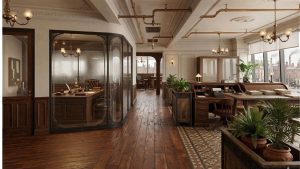
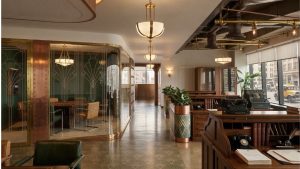
Under the influence of modernism in the 1930s, simpler and more fluid forms began to appear in offices. During this time, office design trends moved away from the Taylorist approach, shifting toward furniture with more organized and clean lines. As steel and glass found a greater place in architecture, the gloomy atmosphere of offices was replaced by a brighter environment.
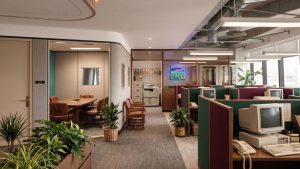
The 1980s represented a true revolution as computers entered the desks. The "cubicle" system aimed to maximize efficiency while providing employees with personal space. The neon colors and technology-oriented furniture choices of the period were the first major technical transformations on the path to today's hybrid working models.
With the dawn of the internet age, walls were completely torn down. In the 2000s, office design trends focused on open areas where employees could socialize and exchange ideas. With colorful seating groups, play areas, and flexible working corners, offices became places to live, not just places to work.
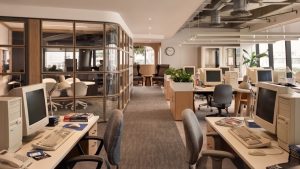
Today, the goals for 2026 point toward a perfect harmony between technology and human well-being. AI-integrated smart systems can offer lighting and temperature settings that adjust to each employee's needs. Sustainability is no longer an option but a necessity.
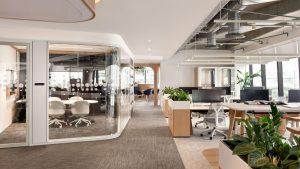
The 200-year journey of offices shows us that a workspace is not just a box, but a living organism. The transition from the heavy atmosphere of the 1800s to the technological and sustainable structure of 2026 continues to be shaped by Diem’s vision of innovation.
You can examine our projects to learn more.
Check Out Our Similar Content:


