


Categories
- Case Study (12)
- Industrial Building (4)
- ESG (26)
- Fit-Out (3)
- News (57)
- Interior Architecture (11)
- Architecture (22)
- Office (46)
- Studio Alliance (24)
- History (2)
- Design (20)
- Technology (13)
- Artificial Intelligence (AI) (4)
Does your office genuinely support your well-being? The 2026 approach to office design goes far beyond aesthetics—it places physical, mental, and emotional health at the center. The work environments where we spend most of our day can, often unnoticed, contribute to stress, fatigue, and reduced performance. The impact of workspaces on employee health is now impossible to ignore. In 2026, smart office strategies introduce a new design mindset—one that transforms this impact from negative to positive.
In the post-pandemic era, employee expectations have fundamentally shifted. Offices are no longer just places to work—they must be places where people feel well. By 2026, healthy office design is directly linked to ESG goals, employee engagement, and employer brand reputation.
Key drivers behind this shift include:
As a result, office design is no longer seen as a luxury—it has become a strategic investment.

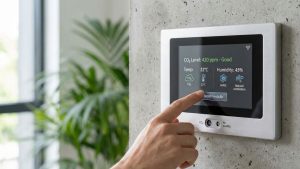
Smart office systems enable spaces to adapt to their users. Through sensors, automation, and data analysis, offices can now respond to employee needs in real time.
Key benefits include:
These systems play a critical role for organizations pursuing sustainable and health-driven workplace design.
Poor indoor air quality is one of the leading causes of headaches, fatigue, and loss of concentration in offices. 2026 trends show that HVAC systems are evolving beyond heating and cooling into active air health management systems.
Smart solutions include:
10-Step Checklist for Offices Reducing Their Carbon Footprint. you can review our blog post.
Incorrect lighting directly affects eye health and energy levels. In 2026, human-centric lighting systems are designed to support biological rhythms.
Key approaches include:
These systems can increase employee productivity by 15–20%, while significantly reducing visual fatigue.
While open offices encourage collaboration, uncontrolled noise is a major source of stress. Acoustic comfort is one of the non-negotiable design elements of 2026 offices.
Common solutions include:
How to Achieve a Digital–Analogue Balance in Next-Generation Offices? you can review our blog post.
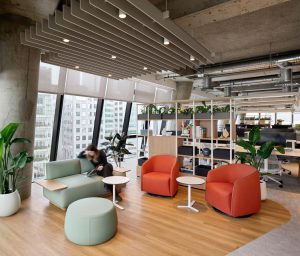
Static seating arrangements are a primary cause of musculoskeletal problems. By 2026, offices are designed to actively encourage movement.
Smart ergonomic solutions include:
Over time, this approach reduces health-related costs and absenteeism while supporting long-term employee well-being.
Healthy office design cannot be separated from sustainability. Energy-efficient systems, natural materials, and long-lasting solutions protect both the environment and the people who use the space.
The offices of 2026 are not just places to work—they are environments that heal, protect, and support. With smart solutions, your office can shift from being a hidden health risk to a powerful tool that enhances well-being and performance.
To explore real-world examples, take a look at inceleyin.


